EYE-WORMS: Research & Projects
For more than thirty years, my practice has been a continuous investigation into the images, patterns and experiences that recur throughout a life. The projects presented here span 1996–2026 and include works that have been completed, abandoned, revisited and remain ongoing. They should not be understood as separate periods or discrete bodies of work, but as interconnected enquiries within a larger, unfinished investigation.
At the centre of this research are EYE-WORMS: recurring visual motifs and internal images that appear across different times, places and forms of experience. I am interested in tracing these images through my own history—following their transformations, repetitions and relationships to memory, perception and imagination. I ask whether they might be understood as synaesthetic phenomena, inherited or cultural forms, psychological structures, or perhaps egregores of my own making.
My lifelong enquiry has been to understand these experiences and to discover ways of restricting, intensifying, transforming or externalising them. This has led me beyond conventional boundaries of contemporary art into painting, sculpture, drawing, photography, writing, installation, performance and experimental processes, as well as sustained encounters with different cultural, philosophical and esoteric practices.
I do not regard the resulting artworks as final answers. Each work is a provisional response: an attempt to isolate, examine or transform something that continues to move through the practice. As the familiar proposition goes, “Art is never finished, only abandoned.” In my case, even abandonment can become part of the research, because an image may return years later in another form.
This archive brings together EYE-WORMS, projects and enquiries, linking each investigation to the artworks, writings and processes through which it has developed. Some may lead to new work; others may remain unresolved. Together they form a map of an ongoing attempt to understand the relationship between internal imagery, synaesthetic experience, memory, culture and the external world.
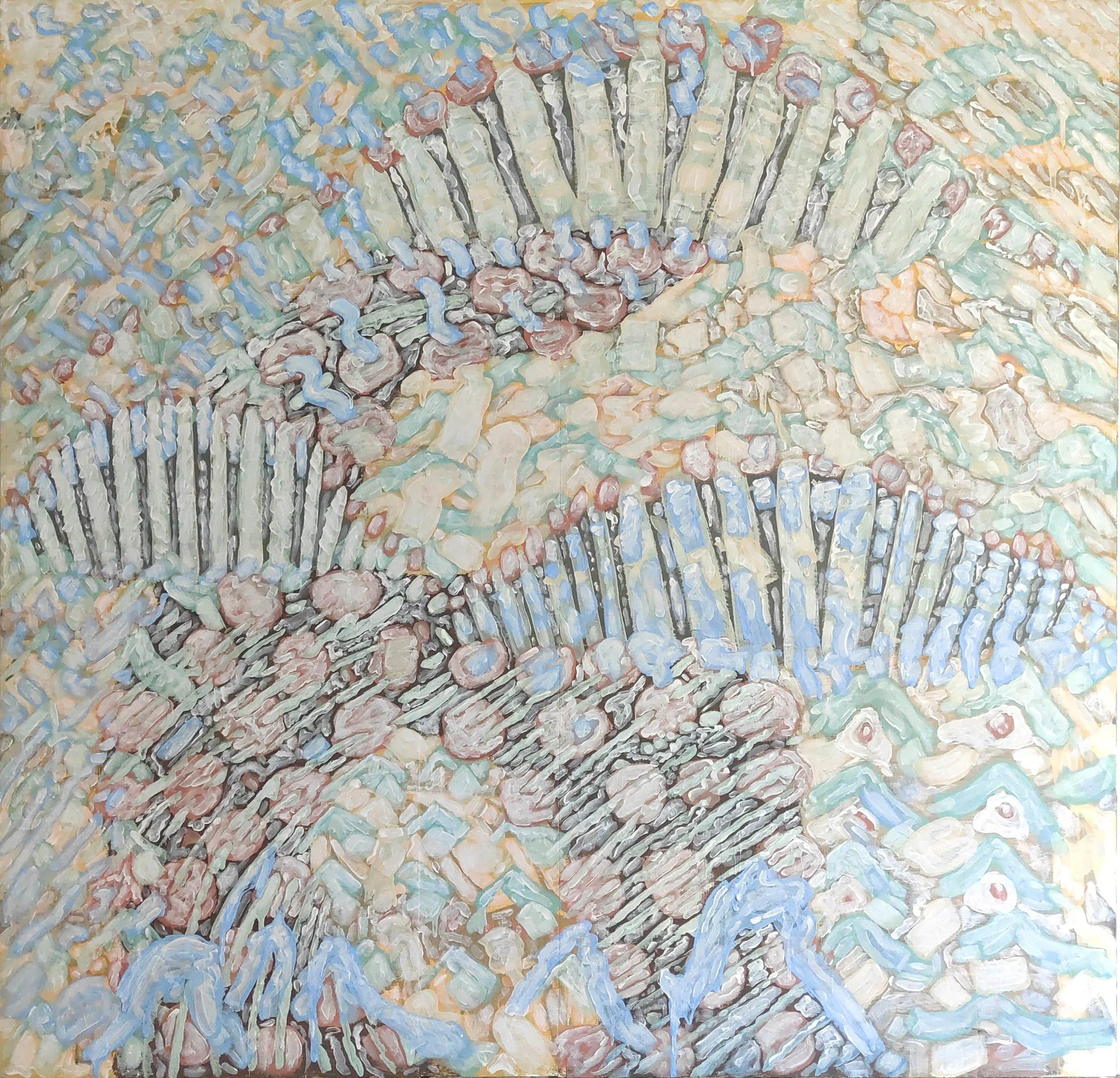
Visual Snow, Synaesthesia & Early Memory
This project investigates the relationship between visual snow, synaesthetic experience, early memory and painting.
Each work begins with a blank white board. I sit before it and practise a form of sustained wall-gazing meditation associated with Bodhidharma. Rather than beginning with a predetermined image, I allow my attention to settle and turn towards childhood memories.
As I hold a particular memory, the visual field of static or visual snow begins to develop. What initially appears as diffuse noise gradually organise itself into shapes, structures and colours. I remain with the experience until an image begins to emerge.
I then begin to paint.
The act of painting becomes a second stage of the investigation. The physical movement of my body, the resistance of the surface, the developing image and the emotional fluctuations of painting; joy, frustration, concentration and uncertainty — generate further visual and synaesthetic responses. The original image is therefore not simply transferred from mind to surface; it changes through the act of making.
I do not attempt to reproduce the initial visual experience exactly. Instead, I allow the painting to develop through a continuous exchange between memory, perception, bodily movement and material process, stopping when the work reaches its own provisional conclusion.
The resulting painting is therefore both an image and a record of the process through which an internal visual experience becomes external.
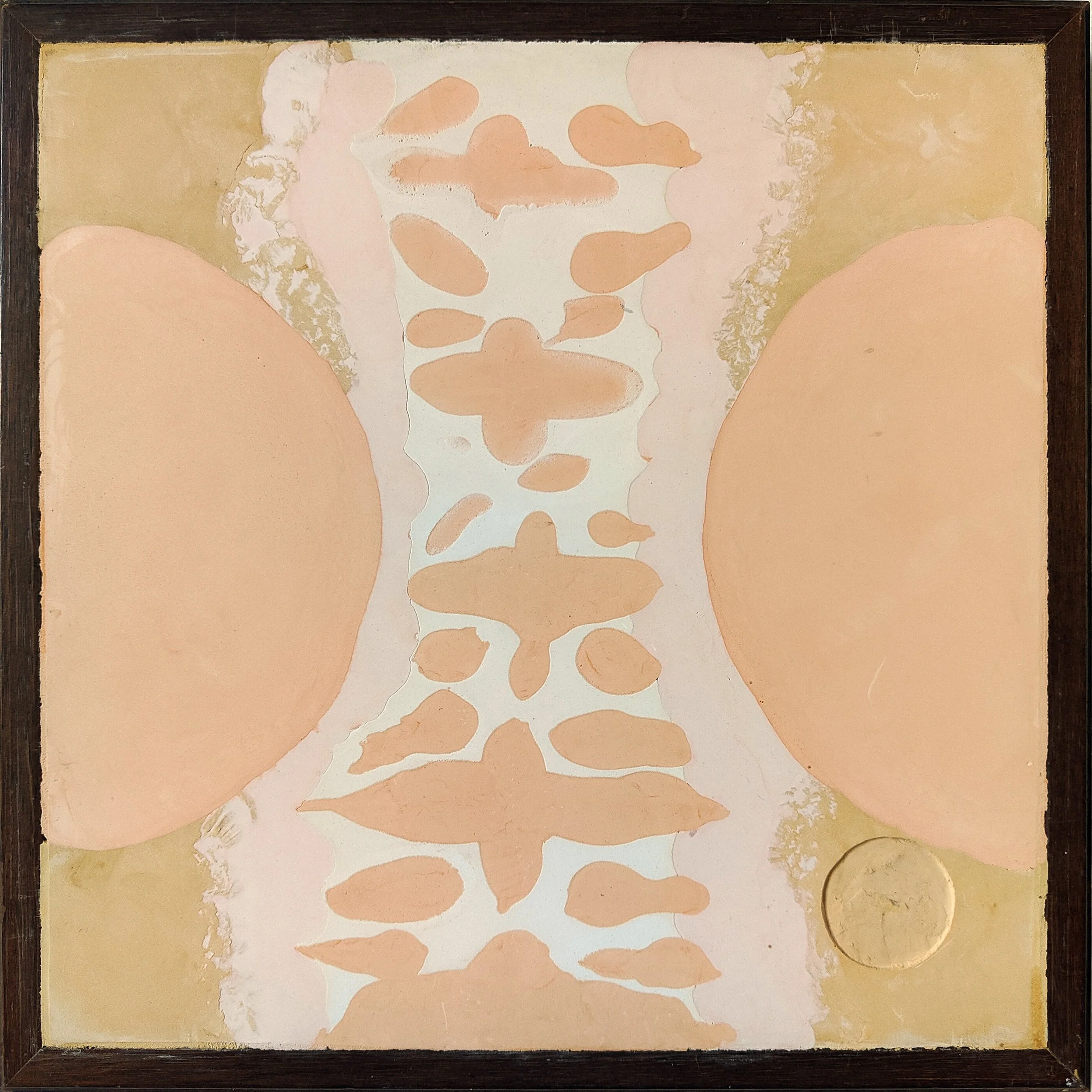
Simple Forms, Synaesthetic Associations
Inspired by the Zen paintings of Sengai Gibon (1750–1837) and his playful ability to express complex ideas through remarkably simple forms, this project investigates how basic shapes can act as triggers for synaesthetic perception.
I began by looking at fundamental forms—circles, ellipses, lines and simple geometric arrangements—and recording the colours, patterns and sensations they evoked. I then began to recognise similar formal structures within everyday objects.
A fried egg, for example, can be reduced visually to an orange-yellow circle contained within a white ellipse. An avocado presents a related structure: a brown seed contained within a green, organic oval. Although their formal relationships are similar, they produce very different colour and pattern associations.
The project explores this gap between form and perception: how a simple visual structure can trigger different internal responses depending on colour, context, memory and association.
Rather than illustrating the objects themselves, the resulting works attempt to follow the synaesthetic response generated by their underlying forms, reducing familiar things towards the visual structures through which I experience them.
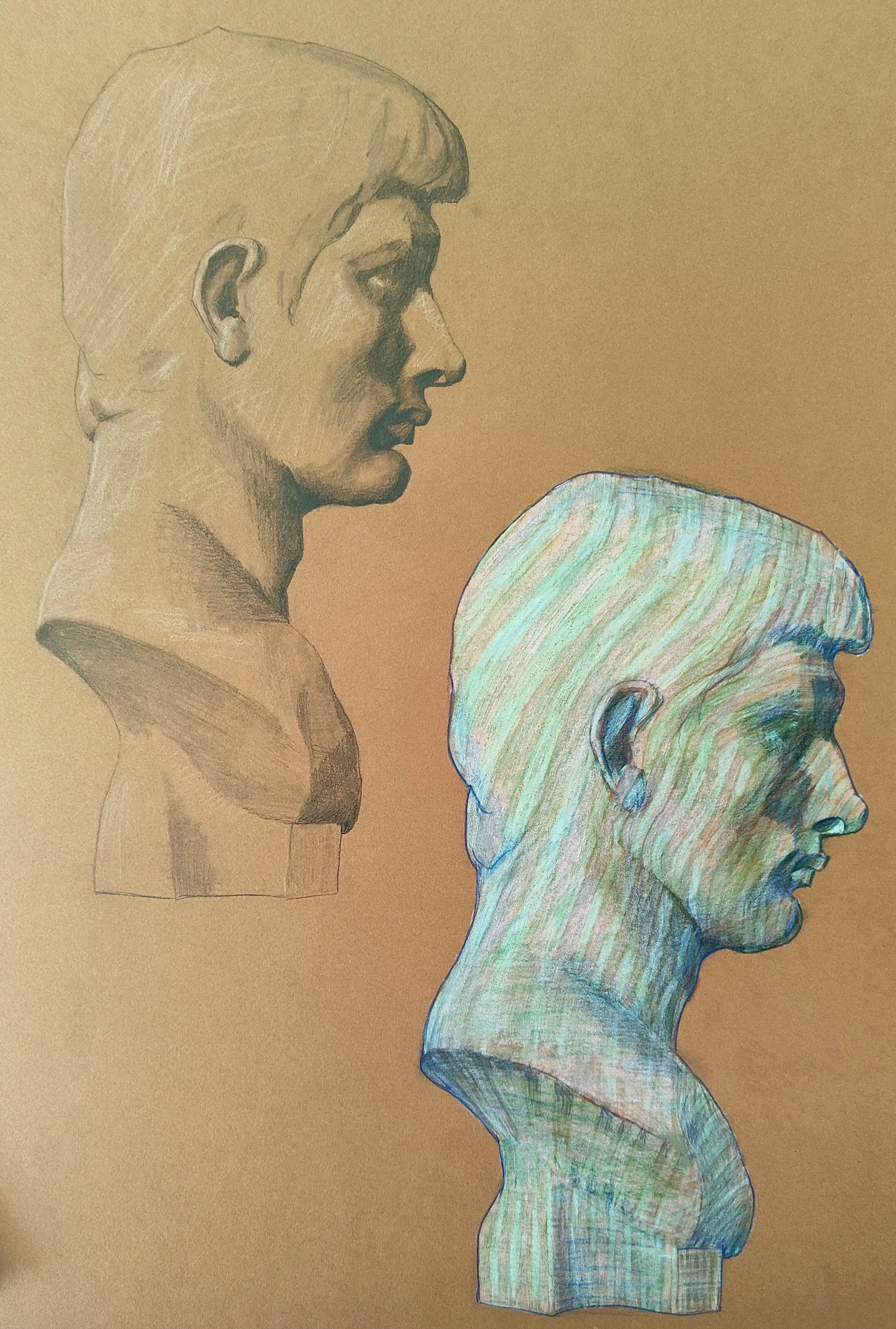
Faces, Portraits & Synaesthetic Perception
Faces and bodies produce some of the clearest and most immediate synaesthetic responses within my practice. When I look closely at a still face or figure, its proportions, structures and relationships can trigger precise colours, patterns and visual sensations. I am interested in whether this response has a fundamental human origin—the face of the mother being among the first forms a newborn encounters or whether it has been intensified through years of looking, drawing and anatomical study.
My sculptural portrait practice explores the possibility of constructing faces from memory, anatomical knowledge and accumulated visual experience, without photographic reference. The face becomes something reconstructed rather than copied: part remembered image, part learned structure and part internal visual response.
This investigation is informed by the nineteenth-century Cours de dessin of Charles Bargue, a rigorous system of observation and copying that has trained generations of artists. My Bargue studies became a way of deliberately training the eye to recognise proportion, structure and subtle relationships within the figure.
In the Grey Sculpture series, I reversed this process, attempting to construct a face that removes the colour associations normally triggered. In other works, I introduce colour not to describe the observed subject but to represent the synaesthetic sensations it generates.
The resulting works move between observation and invention, anatomical knowledge and memory, and representation and perception. I continue to explore portraiture by increasing, transforming, morphing or progressively removing colour and pattern..
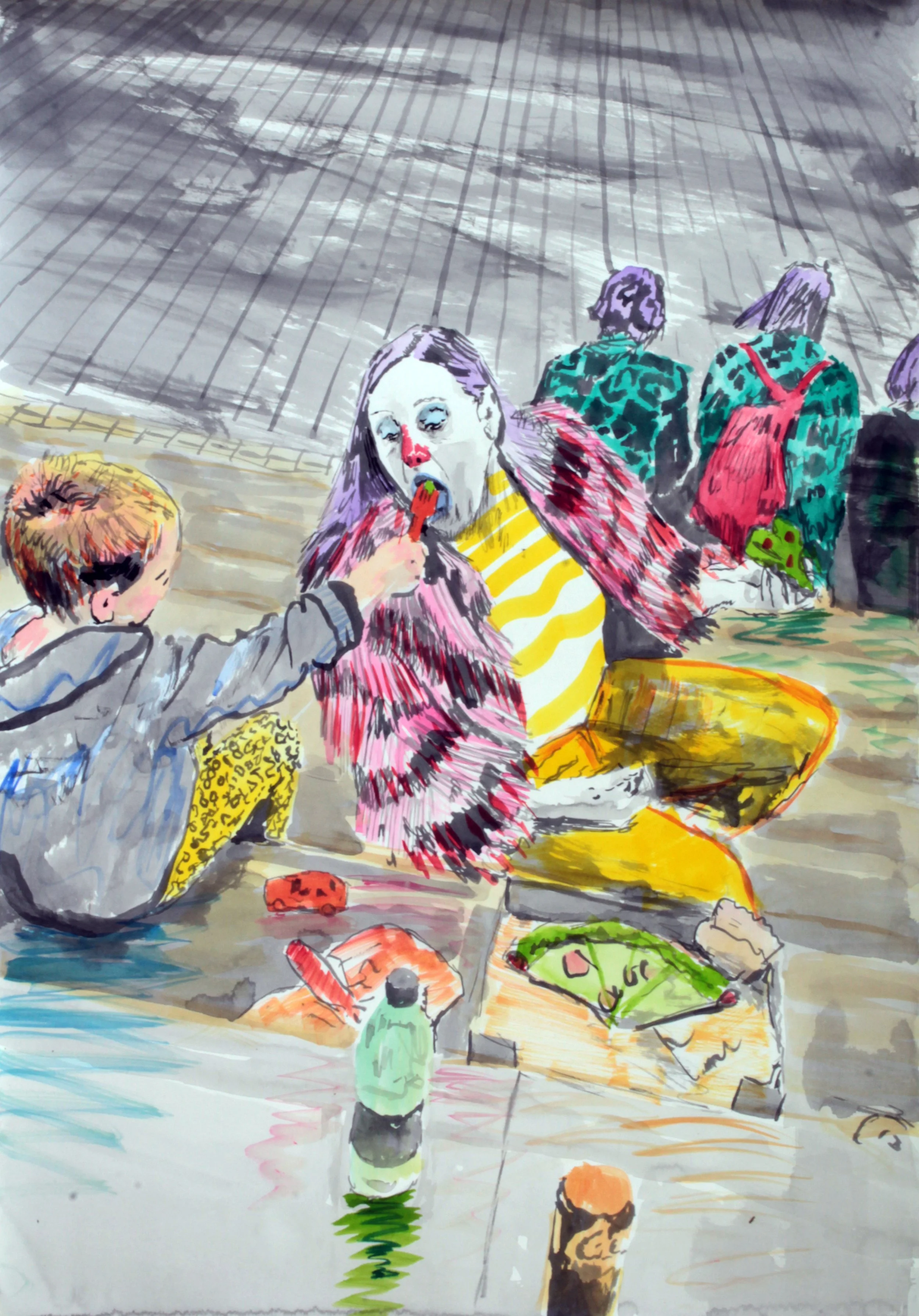
Clown Faces, Hyperphantasia & the Augmented City
This project explores the relationship between hyperphantasia, synaesthetic perception, imagination and the experience of public space.
When I become overstimulated, particularly in busy urban environments, my hyperphantasia can intensify my visual responses. Imagined colours, masks, clothing and patterns begin to overlay people and objects in the environment. Street furniture can transform, faces become clown-like, and ordinary surroundings can be mentally rearranged.
I experience this differently from my more familiar synaesthetic responses. Synaesthesia is generally so integrated into my perception that I rarely notice it unless I deliberately attend to it. The imagined overlays are more conscious and playful. They have become a kind of internal game and a way of manipulating or controlling my visual environment—a technique that I can trace back to my earliest memories.
The project began with observing and drawing people in the centre of Norwich. I photograph these encounters and return to the images in the studio, where I introduce imagined visual layers through painting and drawing. Colour becomes a tool for transforming the perceived world: people acquire clown faces, hats and altered clothing, while buildings and street furniture are modified or replaced.
The resulting works occupy an uncertain space between observation, memory and invention. They begin with real people and places but are progressively altered by internal imagery.
Having produced more than 2,000 paintings and drawings through this process, I increasingly recognise the practice itself as an important part of my investigation into perception. It may also function as a form of psychological regulation: a way of transforming an overwhelming environment into something that can be observed, manipulated and understood.
The work therefore asks where the boundary lies between seeing, imagining and changing what we see—and whether the act of transforming the external world can itself become a fundamental part of how we inhabit it.
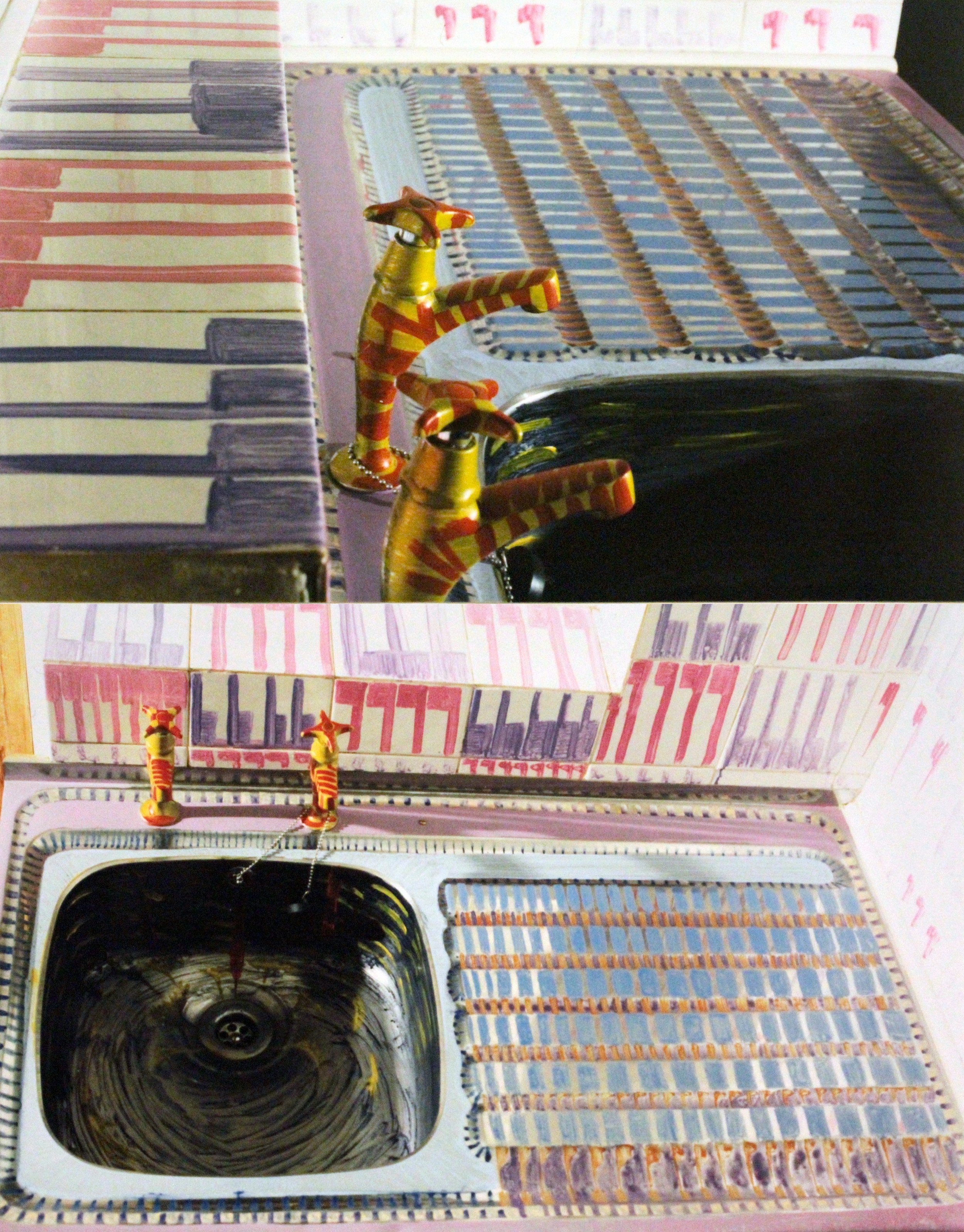
Spatial Painting & Photographic Perception
This ongoing investigation explores the relationship between space, light, colour and synaesthetic experience, using painting and photography as means of externalising an internal response to familiar environments.
The project began in 1996, while I was an art student, with the painting of domestic spaces—including bathrooms and kitchen sinks—as temporary interventions. I became interested in how altering the colour and surface of an ordinary environment could change its perceptual character. This developed into experiments with coloured light and slide photography, using the camera to record the relationship between the transformed space and my synaesthetic response to it.
The photographic strand has continued for three decades. I work in complete darkness, transforming domestic and familiar environments into temporary darkrooms. Using long exposures and a handheld torch, I gradually reveal objects within the frame, allowing light to construct the image over time. The movement of the light becomes both illumination and mark-making, creating photographs that cannot be precisely repeated.
The resulting images are retained as unedited RAW files, preserving the camera's original record rather than reconstructing the image through digital manipulation.
Across the project, painting, light and photography become different methods of investigating the same question: how can an internal perceptual experience be given material form?
The work moves between the physical transformation of space and the photographic recording of that transformation, treating the camera not simply as a device for documenting reality, but as a means of recording light, duration, movement and the act of making something visible.